Permits, energy isolation and the hand-over of equipment between operations and maintenance
The flyer below is the printable A4 version. Use the buttons above to download it or the request form.
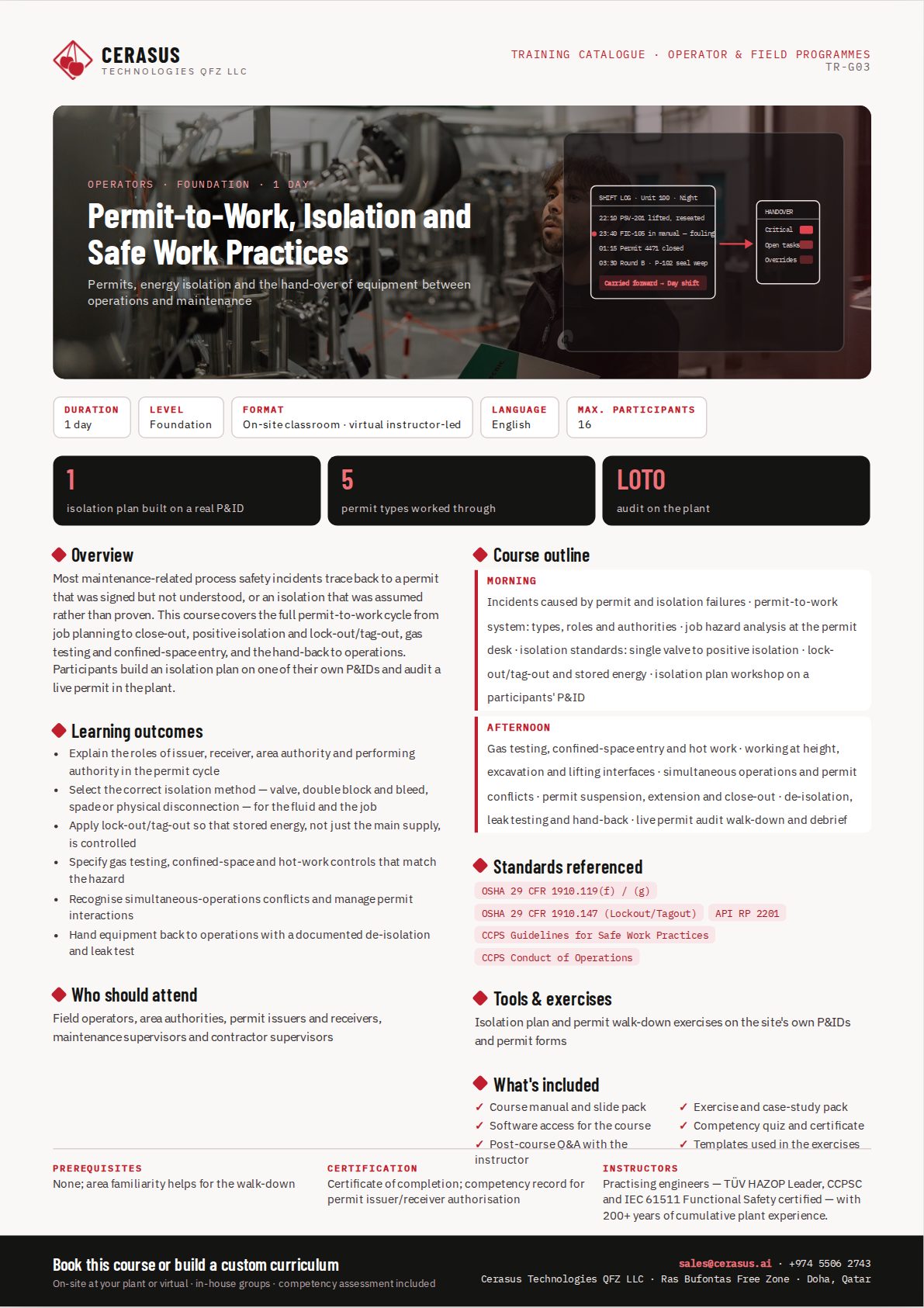
Field operators, area authorities, permit issuers and receivers, maintenance supervisors and contractor supervisors
Most maintenance-related process safety incidents trace back to a permit that was signed but not understood, or an isolation that was assumed rather than proven. This course covers the full permit-to-work cycle from job planning to close-out, positive isolation and lock-out/tag-out, gas testing and confined-space entry, and the hand-back to operations. Participants build an isolation plan on one of their own P&IDs and audit a live permit in the plant.
Incidents caused by permit and isolation failures · permit-to-work system: types, roles and authorities · job hazard analysis at the permit desk · isolation standards: single valve to positive isolation · lock-out/tag-out and stored energy · isolation plan workshop on a participants' P&ID
Gas testing, confined-space entry and hot work · working at height, excavation and lifting interfaces · simultaneous operations and permit conflicts · permit suspension, extension and close-out · de-isolation, leak testing and hand-back · live permit audit walk-down and debrief
OSHA 29 CFR 1910.119(f) / (g)OSHA 29 CFR 1910.147 (Lockout/Tagout)API RP 2201CCPS Guidelines for Safe Work PracticesCCPS Conduct of OperationsSend a short brief — plant, service of interest and what you need to achieve — and a Cerasus engineer will respond with a proposed scope and next steps.
Prefer email or phone? sales@cerasus.ai · +974 5506 2743