CeraPID assesses every PID loop in the plant and tunes the ones that need it. It calculates loop-health KPIs from historian data, diagnoses valve and configuration problems, identifies a process model from bump tests and delivers model-based tuning with an agreed speed of response.
Most 'tuning problems' are not tuning problems. Stiction, over-sized valves, aggressive filters and loops left in manual undermine control long before the controller gains matter. CeraPID separates those causes with data before proposing new parameters.
Tuning itself is model-based: a first-order-plus-dead-time or integrating model fitted to a step or relay test, then lambda (IMC) tuning where the closed-loop time constant is a deliberate choice, not a guess.
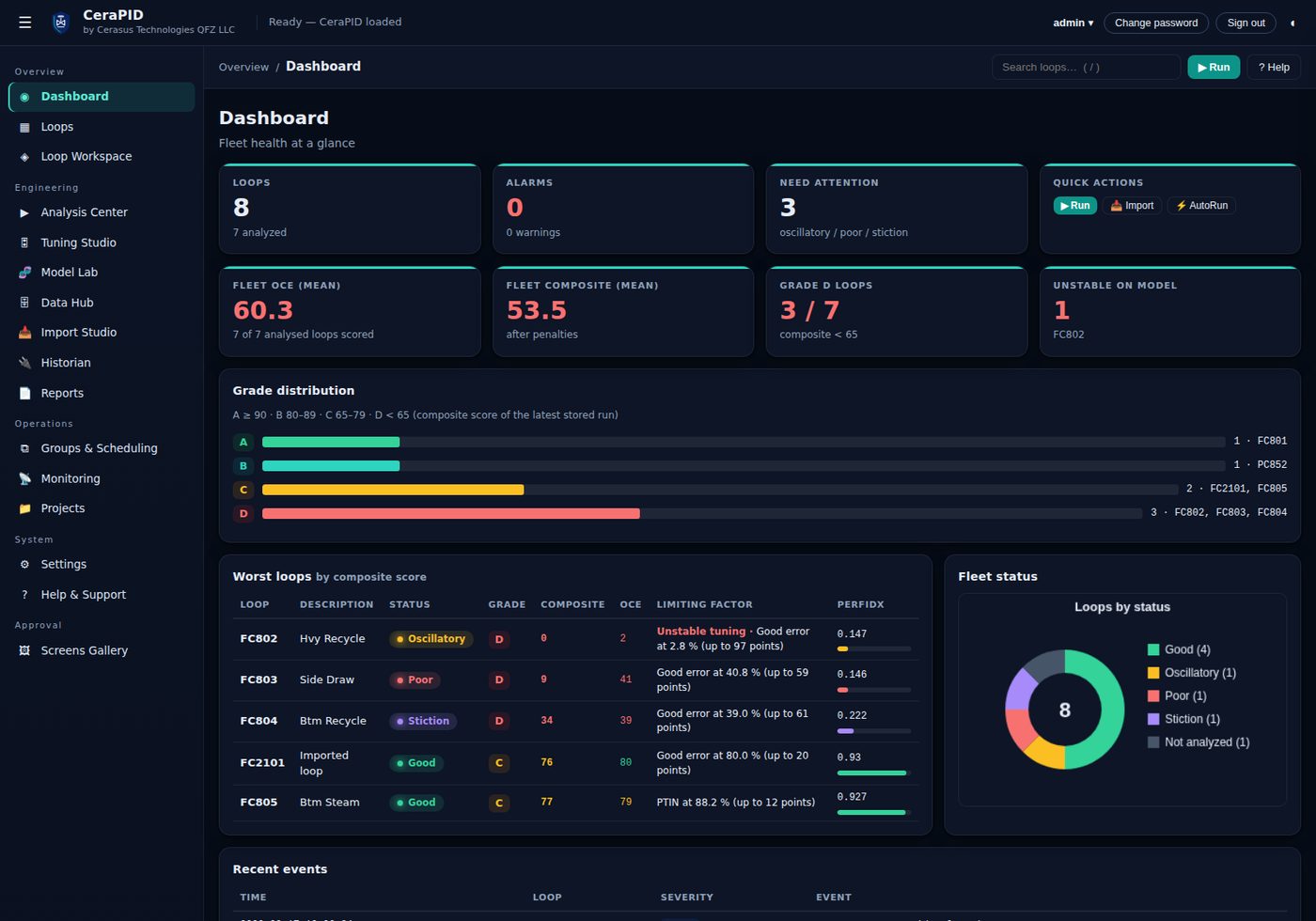
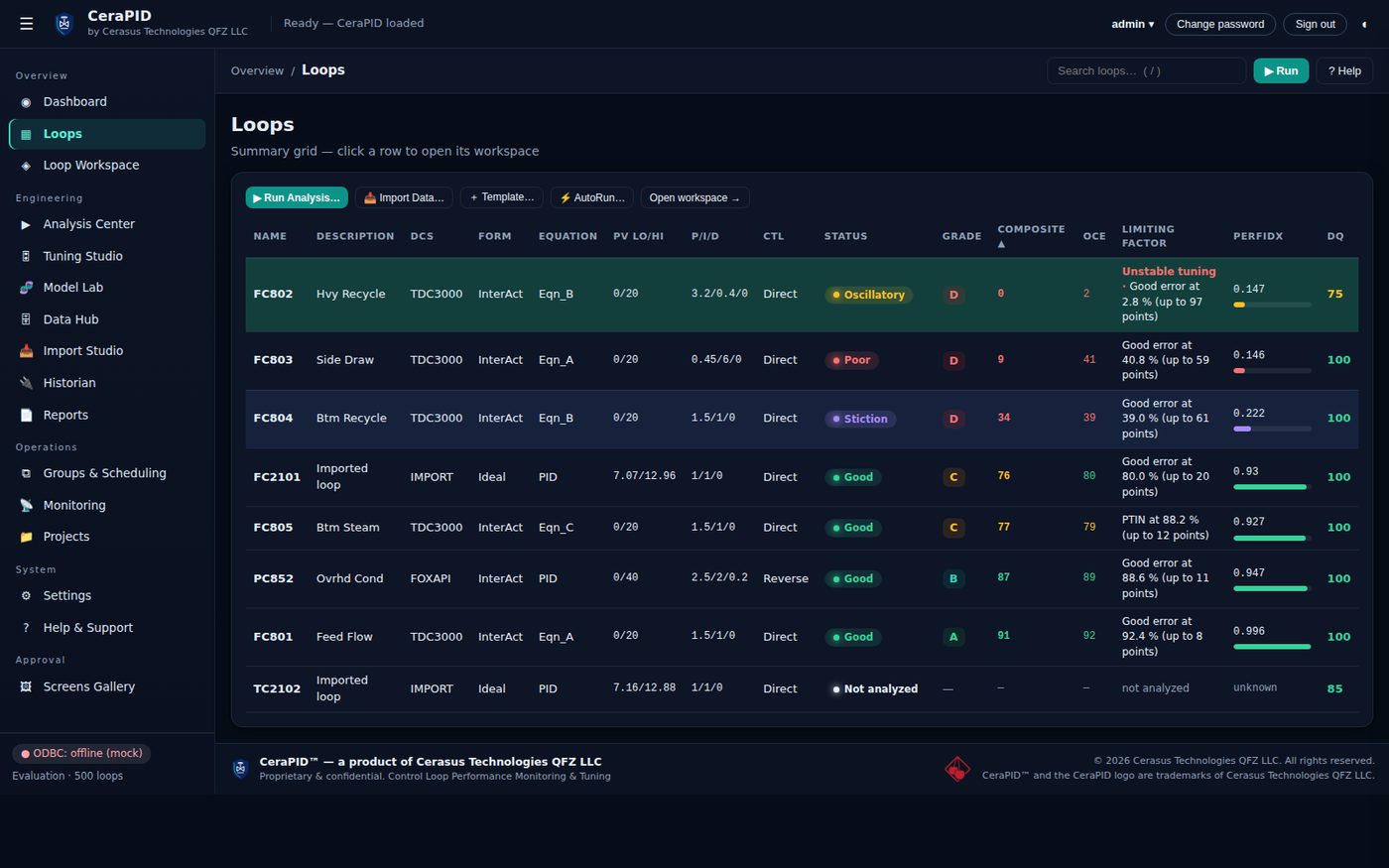
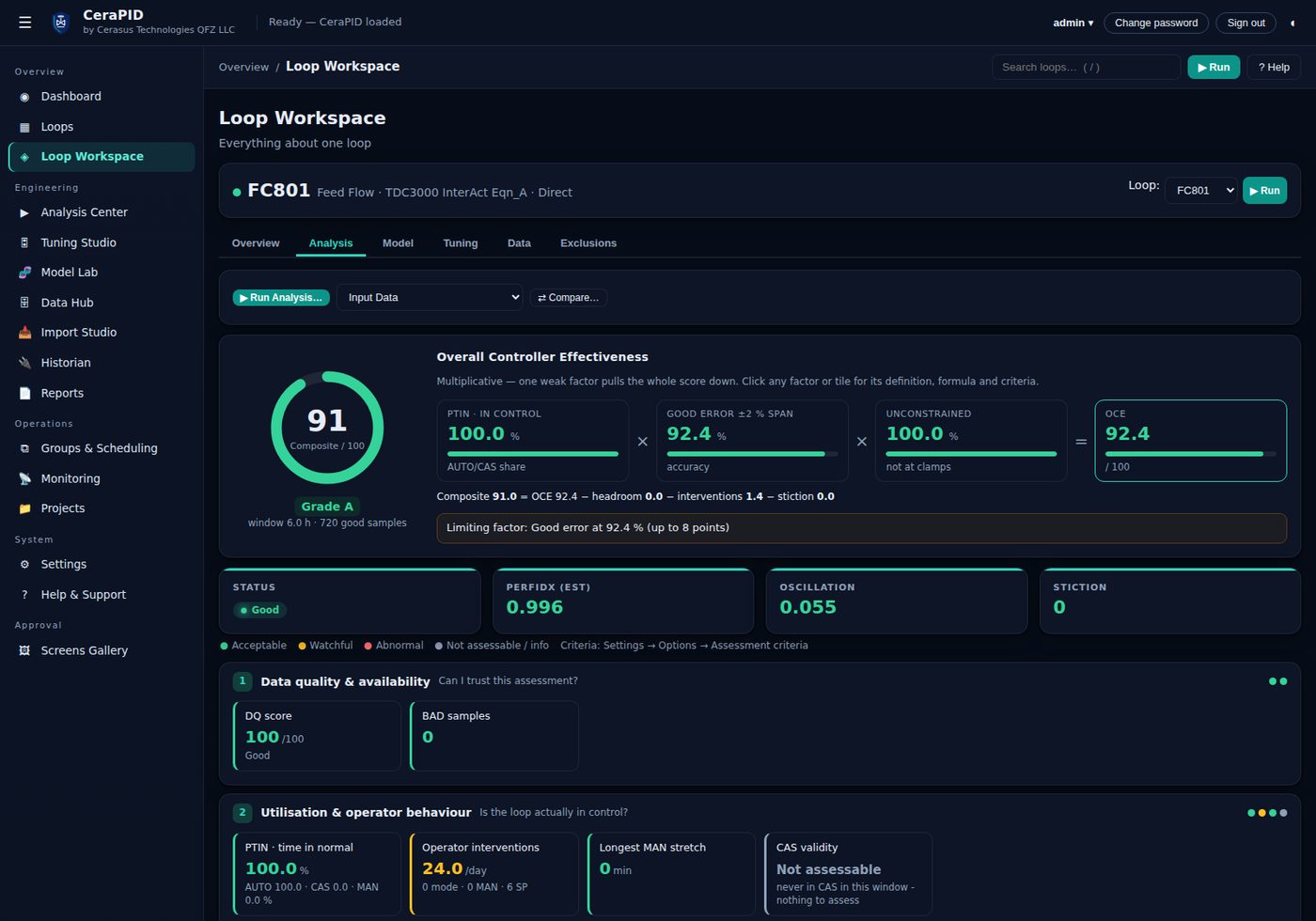
Time in normal mode, oscillation index, variability, saturation and valve travel for every loop, ranked by process impact.
Stiction and hysteresis detection from PV/OP patterns; over-sizing and positioner faults flagged.
FOPDT / SOPDT / integrating model fit from bump, step or relay tests, with fit quality.
Lambda / IMC, SIMC and Ziegler–Nichols families for PI/PID in the DCS vendor's form (ideal, series, parallel).
Closed-loop response preview for setpoint and disturbance before parameters are written.
Per-loop record of model, parameters, response and before/after KPIs for MOC and audit.
Import historian data; compute loop KPIs and rank loops.
Separate valve, configuration and tuning causes.
Run a bump test, fit a model, choose λ, compute parameters.
Compare before/after variability and time in auto.
Screens from the current build. Click any image to open it full size.
ISA-75.25.01 / .02Control-valve response measurement and testingIEC 60534Industrial-process control valvesISA-51.1Process instrumentation terminologyISA-5.1Instrumentation symbols and identificationAPI RP 554Process control systems (Parts 1–3)EnTech / Fisher guidelinesValve dynamic performance specificationsSend a short brief — plant, service of interest and what you need to achieve — and a Cerasus engineer will respond with a proposed scope and next steps.
Prefer email or phone? sales@cerasus.ai · +974 5506 2743