What to look, listen and feel for on a round, and what to do about it
The flyer below is the printable A4 version. Use the buttons above to download it or the request form.
Field operators, panel operators, shift supervisors and trainee operators; refresher for experienced crews
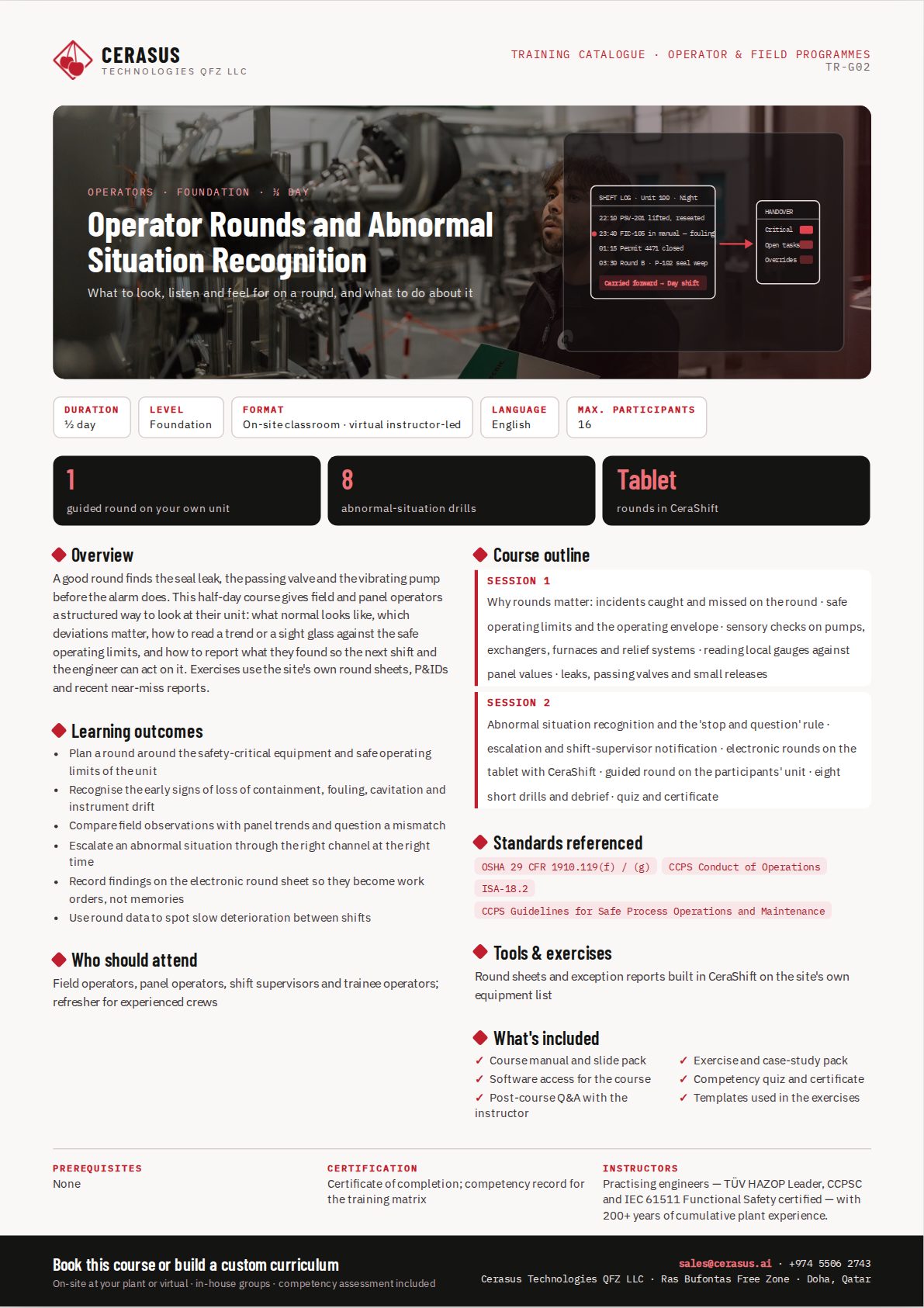
A good round finds the seal leak, the passing valve and the vibrating pump before the alarm does. This half-day course gives field and panel operators a structured way to look at their unit: what normal looks like, which deviations matter, how to read a trend or a sight glass against the safe operating limits, and how to report what they found so the next shift and the engineer can act on it. Exercises use the site's own round sheets, P&IDs and recent near-miss reports.
Why rounds matter: incidents caught and missed on the round · safe operating limits and the operating envelope · sensory checks on pumps, exchangers, furnaces and relief systems · reading local gauges against panel values · leaks, passing valves and small releases
Abnormal situation recognition and the 'stop and question' rule · escalation and shift-supervisor notification · electronic rounds on the tablet with CeraShift · guided round on the participants' unit · eight short drills and debrief · quiz and certificate
OSHA 29 CFR 1910.119(f) / (g)CCPS Conduct of OperationsISA-18.2CCPS Guidelines for Safe Process Operations and MaintenanceSend a short brief — plant, service of interest and what you need to achieve — and a Cerasus engineer will respond with a proposed scope and next steps.
Prefer email or phone? sales@cerasus.ai · +974 5506 2743