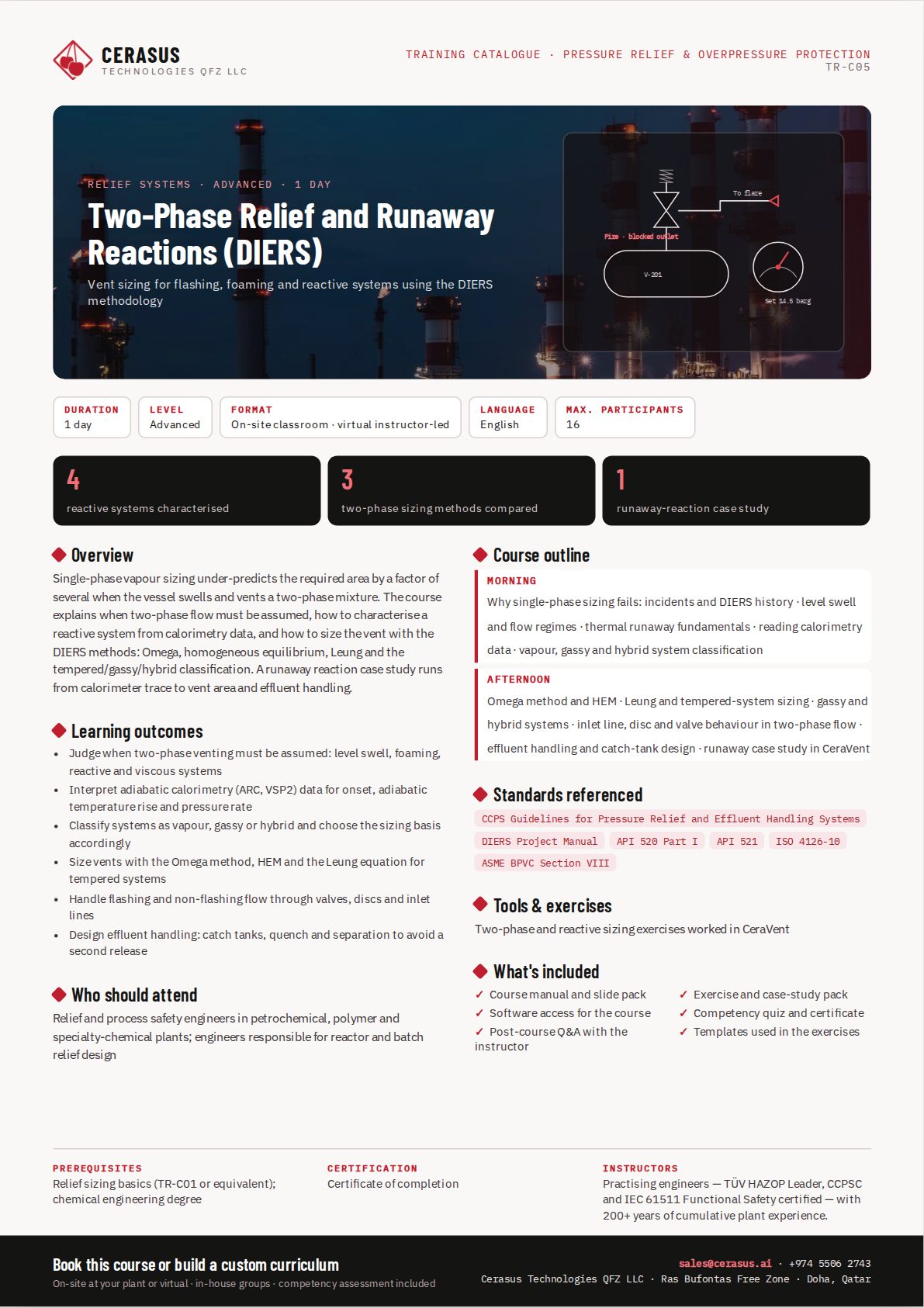
Vent sizing for flashing, foaming and reactive systems using the DIERS methodology
The flyer below is the printable A4 version. Use the buttons above to download it or the request form.
Relief and process safety engineers in petrochemical, polymer and specialty-chemical plants; engineers responsible for reactor and batch relief design
Single-phase vapour sizing under-predicts the required area by a factor of several when the vessel swells and vents a two-phase mixture. The course explains when two-phase flow must be assumed, how to characterise a reactive system from calorimetry data, and how to size the vent with the DIERS methods: Omega, homogeneous equilibrium, Leung and the tempered/gassy/hybrid classification. A runaway reaction case study runs from calorimeter trace to vent area and effluent handling.
Why single-phase sizing fails: incidents and DIERS history · level swell and flow regimes · thermal runaway fundamentals · reading calorimetry data · vapour, gassy and hybrid system classification
Omega method and HEM · Leung and tempered-system sizing · gassy and hybrid systems · inlet line, disc and valve behaviour in two-phase flow · effluent handling and catch-tank design · runaway case study in CeraVent
CCPS Guidelines for Pressure Relief and Effluent Handling SystemsDIERS Project ManualAPI 520 Part IAPI 521ISO 4126-10ASME BPVC Section VIIISend a short brief — plant, service of interest and what you need to achieve — and a Cerasus engineer will respond with a proposed scope and next steps.
Prefer email or phone? sales@cerasus.ai · +974 5506 2743