Header hydraulics, knock-out drums, flare tips and radiation for new and modified disposal systems
The flyer below is the printable A4 version. Use the buttons above to download it or the request form.
Process and project engineers designing or modifying flare and vent systems; relief engineers moving from single-valve sizing to the collection network
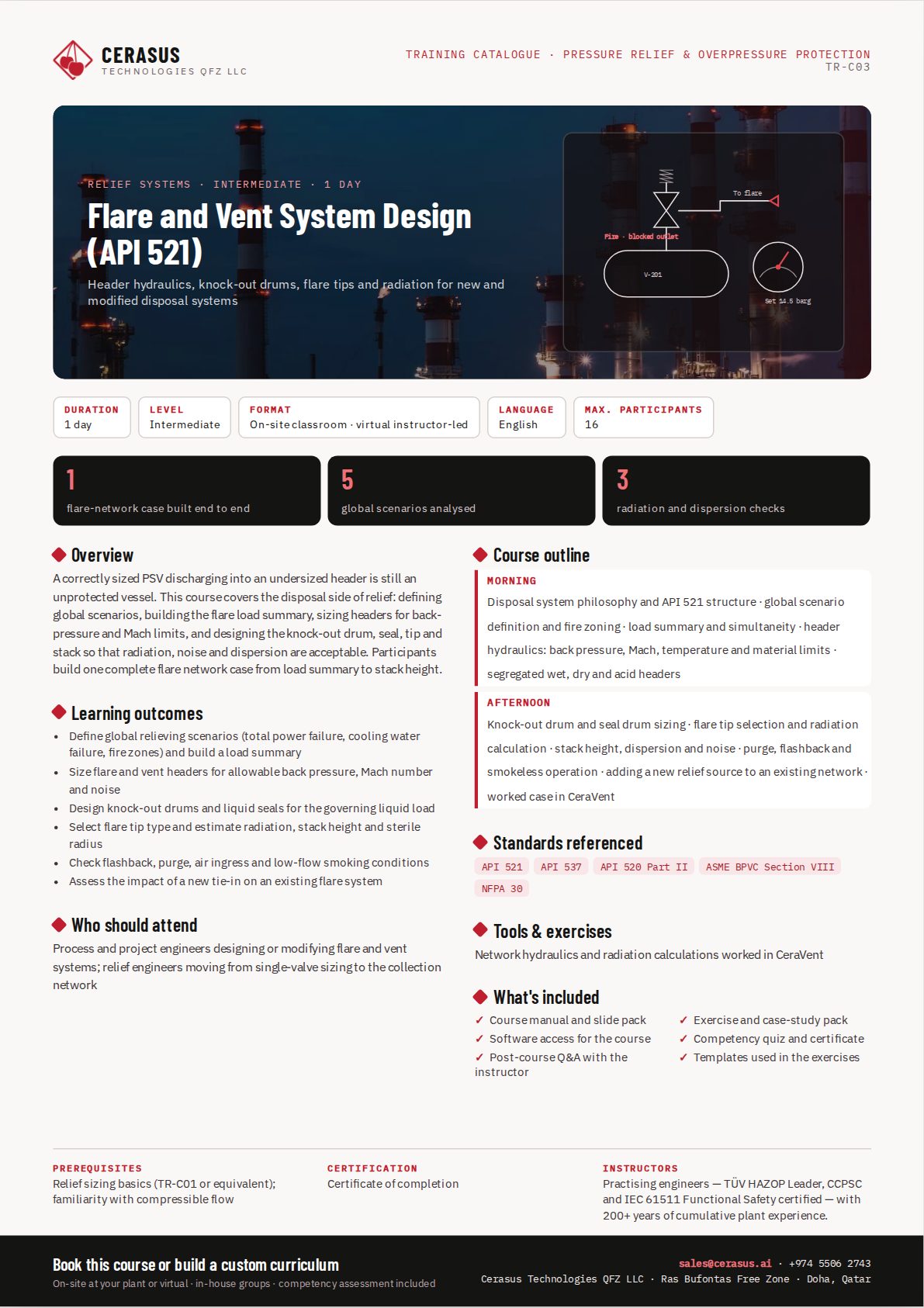
A correctly sized PSV discharging into an undersized header is still an unprotected vessel. This course covers the disposal side of relief: defining global scenarios, building the flare load summary, sizing headers for back-pressure and Mach limits, and designing the knock-out drum, seal, tip and stack so that radiation, noise and dispersion are acceptable. Participants build one complete flare network case from load summary to stack height.
Disposal system philosophy and API 521 structure · global scenario definition and fire zoning · load summary and simultaneity · header hydraulics: back pressure, Mach, temperature and material limits · segregated wet, dry and acid headers
Knock-out drum and seal drum sizing · flare tip selection and radiation calculation · stack height, dispersion and noise · purge, flashback and smokeless operation · adding a new relief source to an existing network · worked case in CeraVent
API 521API 537API 520 Part IIASME BPVC Section VIIINFPA 30Send a short brief — plant, service of interest and what you need to achieve — and a Cerasus engineer will respond with a proposed scope and next steps.
Prefer email or phone? sales@cerasus.ai · +974 5506 2743